How radon mitigation works in a River Falls home
When a house tests high, the standard fix pulls radon from under the floor and sends it out above the roof before it can get inside.
The basic setup
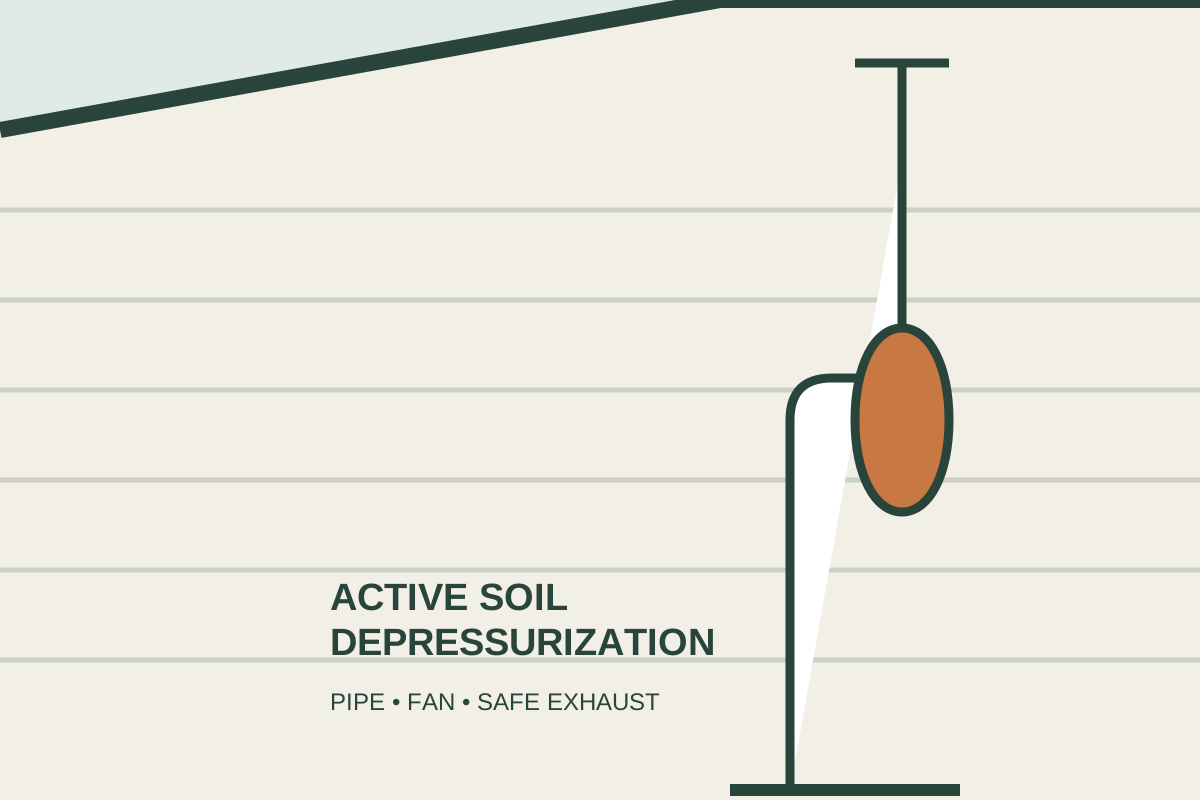
Nearly every house here gets the same approach, called active soil depressurization or sub-slab depressurization.
A hole goes through the basement floor, and a small pit is dug out underneath. PVC pipe connects that pit to a fan, and the fan pushes the gas up the pipe to a point above the roofline. Because the fan keeps the soil under the slab at lower pressure than the basement, radon goes into the pipe instead of into the house.
A pressure gauge, usually a U-shaped tube with colored liquid, is mounted on the pipe. Uneven liquid means the fan is working. Level liquid means it isn’t.
Details that separate a good install
- Where the suction point goes. Many installers test how air moves under the slab before drilling. Some houses need two points.
- Fan location. Attic, garage, or outside wall. Never inside a basement or living space.
- Discharge height. Above the roof edge, away from windows and doors.
- Sealing. Sump lid, open cracks, and the slab penetration around the pipe.
- Cold-weather planning. In western Wisconsin, an exterior run needs to handle condensation and frost. Ask how the pipe will be sloped and protected.
- A label. The pipe should be marked as a radon system.
If the house has a passive pipe
Some newer houses already have a radon pipe from under the slab to the roof, with no fan. Wisconsin DHS notes a contractor can add a fan to make it active. Test first. If the number is high, activating that pipe is usually the simplest route.
What moves the price
We don’t list prices. What changes them:
- Number of suction points
- Interior vs. garage vs. exterior pipe route
- Crawlspaces, additions, or a mix of foundation types
- Electrical work for the fan
- Amount of sealing
- Whether a passive pipe is already there
Wisconsin DHS suggests getting estimates from at least three companies.
The follow-up test
Test again after the system has been running. Keep that result, the install date, and the gauge reading together. If you sell, a buyer will ask. Retest every couple of years after that.
To find someone qualified, see how to find a radon pro, or head back to the River Falls radon guide.
Mitigation questions
Will my system freeze in winter?
Exterior pipes can collect frost and condensation in a hard cold snap. A good installer slopes the pipe so water drains back and plans the route to limit freezing. Ask about it before you sign.
Does the fan run all the time?
Yes. The fan runs nonstop to keep suction under the slab. Check the pressure gauge on the pipe now and then to make sure it's still pulling.
How long does a fan last?
It varies by model and conditions. When the gauge shows no pressure difference or the fan gets noisy, it's time to have it checked.
- We don't sell tests or install systems
- Every figure links to its source
- Covers Wisconsin and Minnesota rules